
NEWS
Featured Articles
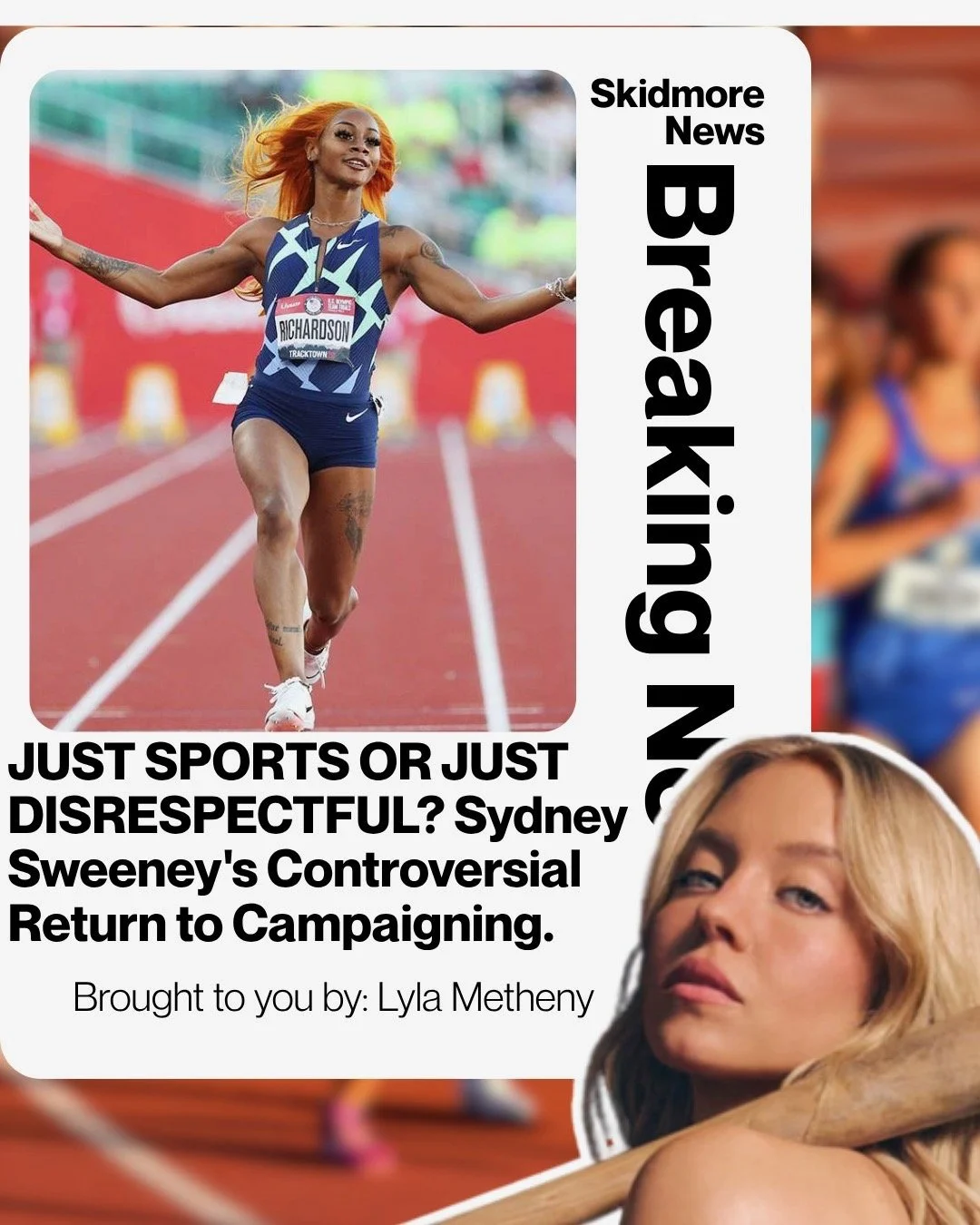
“Just Sports” was the tagline of the ad for the online sports betting platform Novig released on September 9th, but its content shifted viewers’ focus from the marketing of sports betting to the ambassador of the advertisement.
Sydney Sweeney, well known for her roles as Cassie Howard in Euphoria (2019-2026) and Olivia Mossbacher in The White Lotus (2021), poses provocatively with different sports equipment and apparel covering her body, which was otherwise exposed throughout the ad. She speaks in a sultry tone, repeating the word “sports” while the equipment she appears with changes routinely – from basketball hoops to tennis rackets to hockey sticks – to reveal the different sports that Novig users are able to bet on using the service.
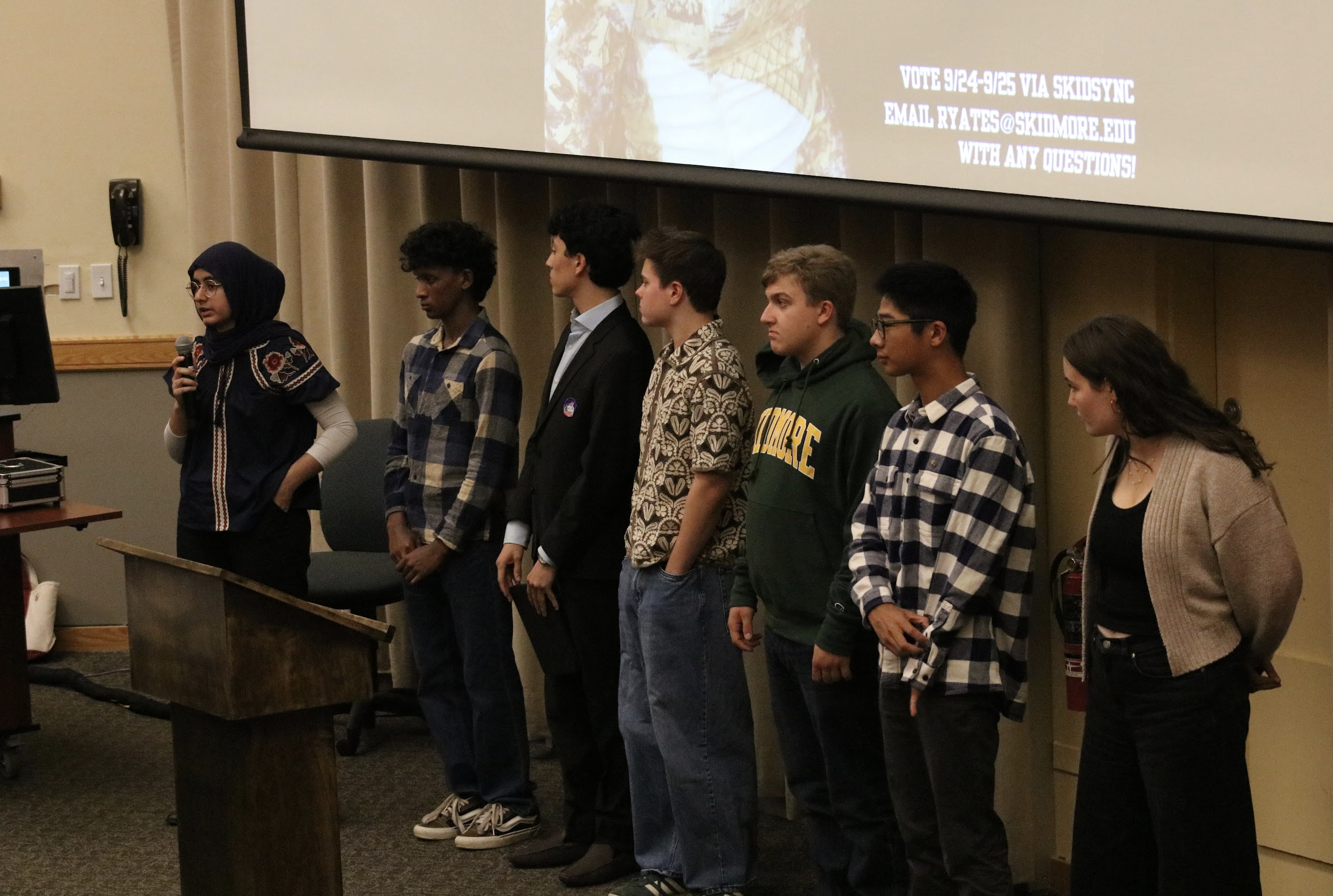
Last night was the SGA speech night, with students showing their support for each candidate. With a few seats open for upperclassmen, the main positions open are for our first-year president and senators.

This year, for the very first time, Skidmore’s Student Government Association will begin providing financial compensation to some of its members. Nine students that occupy the highest ranking and most time consuming positions in SGA will each receive a total of $1,500 in compensation for this academic year.

Amidst global fanfare, the Artemis II capsule containing its crew of four touched down in the Pacific Ocean on April 10. The mission launched on April 1, and spent the next week-and-a-half circling the Earth, launching to the Moon, doing a go-around and returning home.

Recently, the United Nations voted to reaffirm a resolution supporting global women’s rights, a decision that was prompted by severe global backlash against gender equality, as reported by UN reports in 2025 and 2026. It passed with 37 countries in favor, 1 against, and 6 abstentions. These Agreed Conclusions strengthen access to justice for all women and girls, protect against violence and abuse, advocate equality, and prevent future violations.
This year, for the very first time, Skidmore’s Student Government Association will begin providing financial compensation to some of its members. Nine students that occupy the highest ranking and most time consuming positions in SGA will each receive a total of $1,500 in compensation for this academic year.
Amidst global fanfare, the Artemis II capsule containing its crew of four touched down in the Pacific Ocean on April 10. The mission launched on April 1, and spent the next week-and-a-half circling the Earth, launching to the Moon, doing a go-around and returning home.
Recently, the United Nations voted to reaffirm a resolution supporting global women’s rights, a decision that was prompted by severe global backlash against gender equality, as reported by UN reports in 2025 and 2026. It passed with 37 countries in favor, 1 against, and 6 abstentions. These Agreed Conclusions strengthen access to justice for all women and girls, protect against violence and abuse, advocate equality, and prevent future violations.
Arts & Entertainment

Ryan Murphy’s recent Hulu miniseries “Love Story” has revamped the public spectacle of Carolyn Bessette and John F. Kennedy Jr.’s relationship for a whole new generation. The show's release has sparked a wave of conversations through our current pop culture. In particular, the duo’s sense of style has been the catalyst for a recent resurgence in iconic 1990s fashion.

On Sunday, February 8th, 31-year-old Puerto Rican rapper and singer, Bad Bunny, performed the Super Bowl LX halftime show, the first one in NFL history to be almost entirely in Spanish. The performance ran for about 13 minutes and has since broken the record for the most-watched halftime show with an average of 128.2 million viewers in the United States.

This season has come with significant changes to the world of designer fashion, with several notable fashion houses taking on new creative directors. The infamous Demna Gvasalia, known for his work at Balenciaga, is one such notable example. Gvasalia recently debuted as creative director of Gucci in Milan to much excitement and divided opinions, while his old role at Balenciaga went to designer Pierpaolo Piccioli, who previously worked for Valentino.
Sports

On December 9, President Marc C. Conner announced the official opening of the McCaffery-Wagman Tennis and Wellness Center on January 21st, 2025. This long-awaited project was possible due to the generosity of the McCaffery-Wagman-Wachenheim families and by the additional support of Skidmore alumni and families.

From October 2-6, Skidmore Athletics held its eighth annual All in to Win campaign, a fundraising initiative focused on supporting and enhancing all of Skidmore’s athletic programs. The effort brought together alumni, parents, and other Thoroughbred supporters to contribute financially toward the success of Skidmore’s athletic teams and facilities.
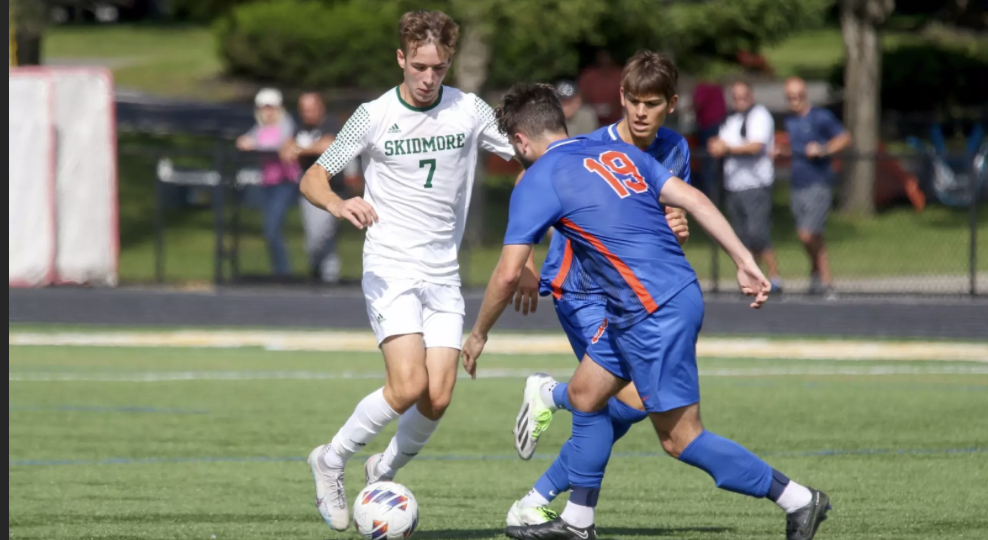
The Skidmore Men’s Soccer Team drew with SUNY Oswego this past Saturday, September 21, by a score of 1-1. After a back-and-forth match throughout, Skidmore notched the first goal of the game in the 83rd minute off a beautiful finish from Junior Midfielder Tobias Catizone.
Opinions

In a novel celebrity scandal, Timothee Chalamet has found himself in opposition to major performing industries after making a sweeping assertion that “no one cares” about art forms like ballet and opera. The trouble with Chalamet’s barbs is that they are marked by the exclusivity of the environment he has grown accustomed to.

When racist behavior from leadership is normalized, students learn it’s compatible with power. This reshapes democratic engagement. One reason as to why this behavior has become so normalized is based on the Overton Window political theory.

For two months, FLEX has been the primary form of transportation for Skidmore College to Saratoga Springs. FLEX, a swipe-to-pay minibus that accepts Skidmore ID cards in lieu of payment, charges the standard bus fare of $1.50. Despite the CDTA’s optimism that FLEX would reduce waiting times and increase ridership, the implementation of the new system has resulted in several accessibility concerns and safety risks.
Features

When the world outside is monochromatic, your fingers are burnt by the cold, and your mind becomes sluggish—curl up with a movie! It feels like such a luxury amidst all of the short-form entertainment that surrounds us. And while a tropical escape is sometimes necessary, I encourage my readers to try a movie set in winter (and not the Christmas kind!).

As a college student who lives in the dorms but misses cooking, I find there’s only so much I can do with a standard microwave. Luckily, I’ve found ways around this issue. In The 5 Ingredient College Cookbook, Pamela Ellgen shares easy and affordable recipes perfect for a college student with limited access to appliances.
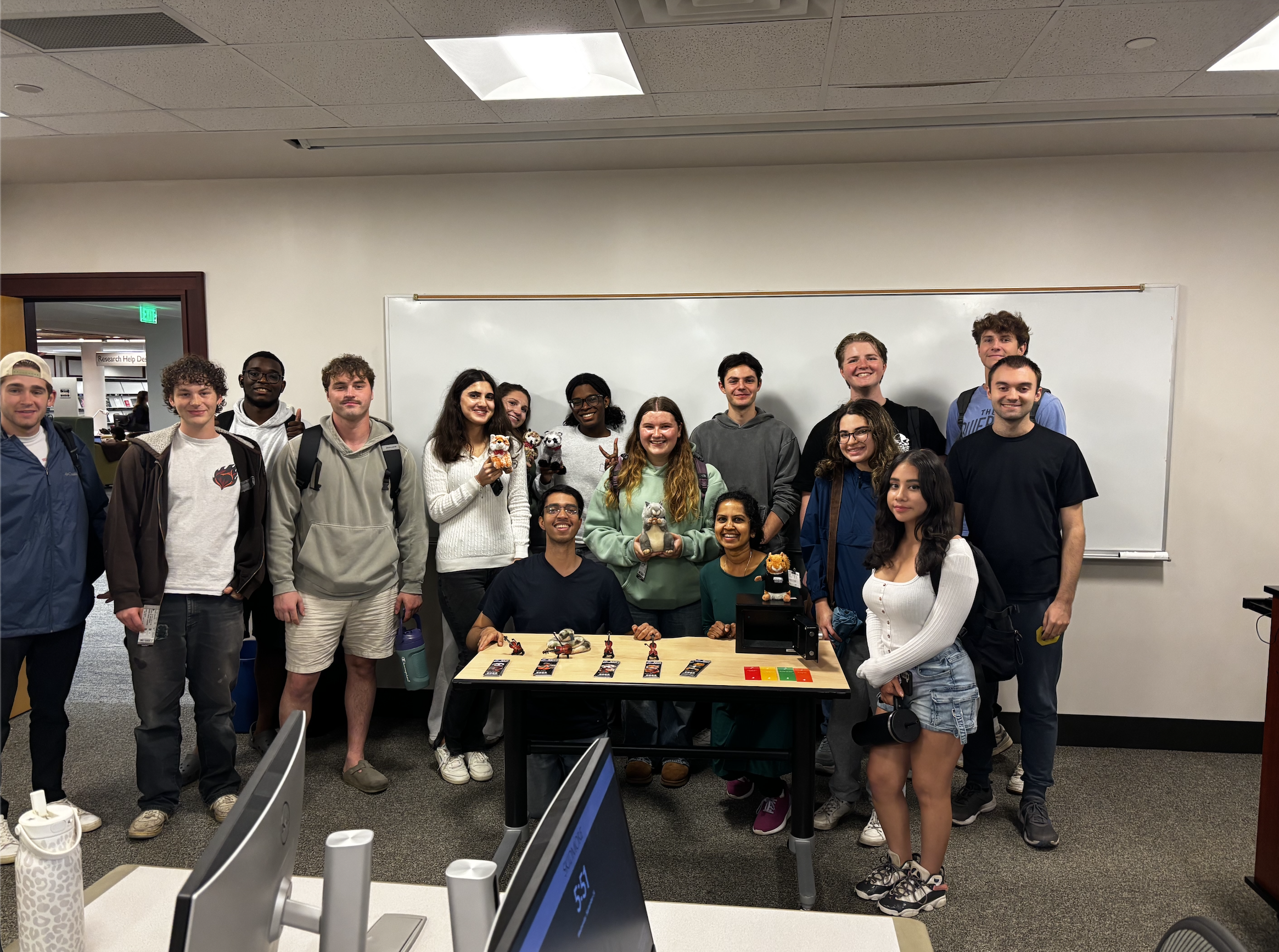
Every fall semester, Skidmore hosts “Scribner Seminars” for its incoming first-year students. These seminars explore, through meaningful discussions and written analysis, topics ranging from “Womanhood in Russia” to “Codes and Cyphers.” This fall, “Defense Against the Dark Arts: Technology Edition” is currently being taught by Professor Aarathi Prasad, along with Peer Mentor Azizul Hakim ‘26.
There is an art in dissecting a genocide.
It involves the composition of long lists of possible instigators, the identification of the breaking point, the acquiescence that one cannot determine the precise moment in time that produced the now-certain result. To perform an autopsy, the coroner must distance himself from the body; the victim’s human identity must remain untouched by the emotions of the examiner so that cause of death may be accurately reported. Dissection of a genocide requires the same separation.