Let’s face it: we’ve all had issues with the Skidmore Wi-Fi, which seems to be down every other week and only works well in certain buildings on campus. Consequently, there seems to be a constant uproar brewing amongst students regarding the issue of Wi-Fi in the dorms and other residence buildings.
Read moreMayday, Mayday! Know Your Labor History
Every May, people come together across the world to commemorate the heroic efforts of workers during what is now known as May Day, or International Workers’ Day. The celebration’s origins date back to 1886, when more than 300,000 workers across the United States from hundreds of different trades walked off their jobs in what became the first May Day celebration in history. For decades people had been putting up with inhumane working conditions and cruel 12–16-hour workdays. Regional demonstrations had been underway at this point. However, May 1st would mark a turning point in history, being the day of the first nationwide general strike demanding an eight-hour workday.
Read moreJakub Jankto and the Importance of Gay Male Athletes
On Monday, February 13, Czech Republic’s Jakub Jankto came out via an earnest video posted to his social media accounts. The third active male soccer player, and some claim the highest-profile one, to come out, ever. Jankto is currently playing for the Czech Republic’s AC Sparta Prague club, on loan from Spanish club Getafe, where he will return next season. He has been a part of the Czech national team since 2017 and has made 45 appearances for them at the international level.
Read moreA Robot Did My Homework: Implications of Artificial Intelligence
My family, like many others, sends out an annual at the end of December — or, more realistically, the beginning of January. The page-long note accompanies a smiley holiday card and summarizes the twelve months prior in sweeping, unspecific terms to a selection of friends and family. This year, we asked artificial intelligence to write the letter for us, using a platform called ChatGPT. The decision was born, in small part, out of procrastination, and in large part, out of curiosity. What we anticipated when we input the prompt was amusement. What we did not expect was accuracy.
Read moreThe Dreaded Debate Over Exams Versus Papers
Much debate exists as to what form of assessment is “better” or “more productive.” At first, the question really becomes what would you rather do: take exams or write essays. However, one could argue that it is important to consider which method is least stressful for students and the most fair assessment of the knowledge students have retained in their classes. Additionally, is it fair for students that assessments are often seen as the sole evaluators of our understanding of class material?
Read moreThe Case for Art Spaces
This June, after over a year of research and development, Skidmore released their Campus Master Plan, an assessment of current facilities and a guide to the next decade of campus development. It’s ambitious and accessible, full of great ideas and long overdue admissions of substandard facilities. However, one thing that was conspicuously absent was any meaningful mention of Skidmore’s art department. All that it said on this topic was that, in 10+ years, there would be some sort of “condition focused renovation.” In speaking with other students, though, it’s been hard to ignore the general sentiment that changes in the art department are long overdue.
Read moreThe Solidarity Project: the Story of my Art Installation in Case Gallery
A few months ago, Akhil Reed Omar, a professor at Yale University, came to Skidmore. He was giving a talk about the overturning of Roe v. Wade and the future of the Supreme Court - both topics I am interested in. But that is not why I attended this lecture. I attended this lecture because I wanted to ask him a specific question.
Read moreWhy the #MahsaAmini Protests are Unprecedented and Why We Should Pay Attention
There is a temptation in the U.S. to compare international events to current events domestically, and the recent Iranian protests are no exception. Protests against the oppressive laws that women have endured for over forty years in Iran have happened only months after the overturning of Roe v. Wade, throwing many U.S. states back into 20th-century policies. The comparisons are easy to make, but before we compare, it is important to better understand the context behind Iran and why these protests are unprecedented.
Read moreYik Yak: Liberation in Anonymity
“I’ll be in the library today if anyone wants to hit on me.”
“College is a game show called Am I Not Hungover or Just Still Drunk?”
“these tours really making me feel like a zoo animal today.”
These are just a few of the most popular “yaks” one finds on their Yik Yak feed upon opening the app on a Sunday morning. Yik Yak has grown in popularity among college students, Skidmore being no exception. Yik Yak launched in 2013 only to close in 2017, then relaunched in 2021. Its appeal to Skidmore and similar liberal arts institutions is that it enables anyone to post anonymous 200 character “yaks” viewable within a five-mile radius. With 87% of students living on campus, the app has arguably become a part of campus culture, bringing together students who don’t even know each other.
Students utilize the app for a variety of reasons: to find out what's happening on or off campus, to air out their grievances with administration, or even to use it as an online diary. With the added anonymity, people can post unfiltered yaks with the comfort of knowing that no one will be able to identify the poster. This, of course, comes with its drawbacks; the initial reason for the app's 2017 ban was due to cyberbullying and hate speech. People felt empowered to “name-drop” professors or fellow students without consequences. Additionally, students could violate academic integrity, or harass one another. This issue has become less prevalent since the relaunch, but still occurs.
With Yik Yak's relaunch, there are optimistic sentiments regarding its potential for good within the campus community. Furthermore, for investigative purposes, the app’s new privacy policy allows posts to be traced to the cellphone number used to create the account, hopefully holding those who take advantage of the app’s obscurity accountable.
Contrastingly, students have come to appreciate the app for its ability to cultivate a community. Who needs Google Maps when I can just ask people on Yik Yak where the best thrift shops are in the area? (The answer is Treasures Boutique and Noah’s Attic, apparently). Students can exchange complaints about workload, dining hall food, lack of sleep, etc. More than this, people can discuss insecurities unfiltered. The anonymity that comes with Yik Yak makes students entitled to be more authentic with their thoughts and feelings compared to other social media apps. This sense of authenticity and relatability can empower students to increase self-esteem and establish a more open community in the real world, something other apps such as BeReal or Snapchat aspire to emulate.
Yik Yak enables us to not only connect with Skidmore, but the students who attend it. As the new academic semester ramps up, and Skidmore students become more and more consumed in their studies, by simply opening Yik Yak, students can engage with hundreds of others in our community through just one post.
The Read Scare of 2022: Who benefits from new books being censored and why does it matter?
Conservative-driven book banning has seen a resurgence these past three months with new censorship debates popping up in schools, courts, and homes across the country. Book banning is not a new phenomenon nor is it a practice isolated to a single political party or ideology. This wave of censorship, however, has been particularly far-reaching in terms of its geographically expansive nature, the quantity of books banned, and the broader implications it has when it comes to banning books in 2022.
Read moreHypocrisy in the Media: How the Oscars Deals With Scandal
To preface—the purpose of this article is not to condone or antagonize Will Smith’s slap against Chris Rock. Merely, it is the starting point at which we will unravel The Academy’s twisted way of dancing around scandal when it is convenient for them.
Read moreThe Read Scare of 2022: Who benefits from new books being censored and why does it matter?
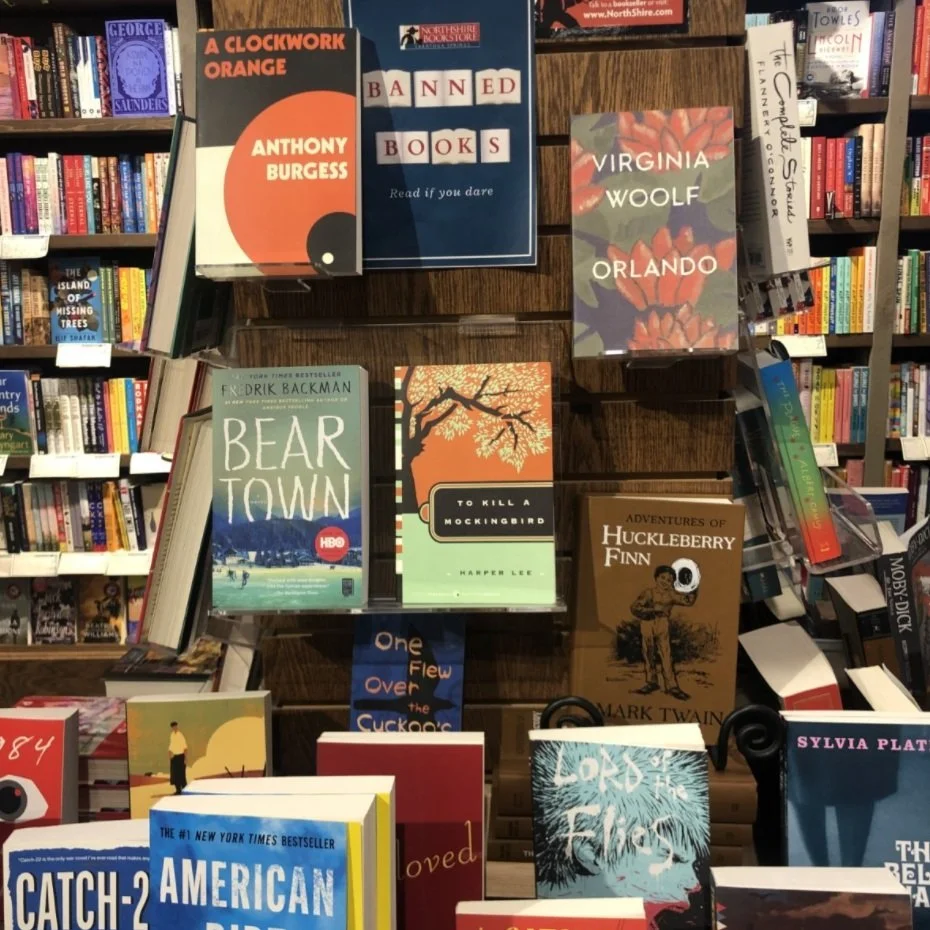
Photo by Bella Hynes
Conservative-driven book banning has seen a resurgence these past three months with new censorship debates popping up in schools, courts, and homes across the country. Book banning is not a new phenomenon nor is it a practice isolated to a single political party or ideology. This wave of censorship, however, has been particularly far-reaching in terms of its geographically expansive nature, the quantity of books banned, and the broader implications it has when it comes to banning books in 2022.
Don't Say Gay
On Tuesday, March 8, a bill titled Parental Rights in Education passed the Florida Senate. Then, on March 28, Governor DeSantis signed it into law. While the name sounds fairly innocuous, this bill became known in public discourse as the “Don’t Say Gay” bill, for its true agenda.
Read moreThis Is Bigger Than Sports: Trans Rights and Athletics
Over the last few decades, the LGBTQ+ community has made tremendous progress in the United States and some other countries. However, there is still a long way to go in most of the world towards liberation, and unfortunately we are in the midst of a backlash which focuses on a particularly vulnerable subset: transgender people. How did we get here, and what does this mean for the future?
Read moreThose Who Fail to Learn from History: COVID Restrictions
For the last 2 years, restrictions have been instrumental in containing the spread of COVID-19 and continue to be the first line of defense in protecting us from the virus which has claimed millions of lives worldwide. However, individuals and governments alike have spent the last few years caught in a cycle of loosening and subsequently tightening restrictions, never learning from failures or breaking the cycle of mistakes.
Read moreJoe Rogan and Spotify: It Isn’t About Free Speech
In May 2020, when the pandemic was still in its infancy, Spotify paid over $100,000,000 to become the exclusive platform of mixed martial arts commentator Joe Rogan’s popular Joe Rogan Experience (JRE) podcast. Now, nearly 2 years later, this decision, which received relatively little media coverage at the time, is coming back to bite them.
Read moreThe Pollution of Politics: What We Can Learn From This Year's UN Climate Conference
The unfortunate reality highlighted, once again, by this year's COP is that we cannot rely on our governments, their theatrical conferences, and various overly optimistic speeches given by political leaders to be the catalyst for change needed to curb the catastrophic climate destruction. That being said, the greater attention this year's conference received and subsequent voices of dissent towards the inaction of our current leaders have been an encouraging sign for the future and changes that are hopefully soon to come.
Read moreWe Need to Pay More Attention to SGA and Here's Why
Community participation in SGA is one of the few assured ways that institutional change can be made with definitive cooperation with the student body. Being involved and supportive of SGA means, first and foremost, voting in elections, but it also requires voicing students’ opinions to SGA, so they know how to work with the administration to best benefit the entire student body.
Read moreWho Are the Terrorists, Anyway? The Worrying Use of State Violence Against Civilians in the Middle East
It is clear that the US and Israel’s practicing of “counterterrorism” is quite similar to actual terrorism, even though we seldom see this military policy described as such. These states provide good case studies of this phenomenon due to their high reliance on rhetoric surrounding terrorism in the Middle East and their history of using violence against civilians. Without changes in behavior, the United States and Israel will have a hard time making the case that their efforts to fight “terrorism” are distinctly different (and more admirable) than the actions of “terrorists” themselves.
Read moreWhat Should Title IX Be?
Over time, the definition of Title IX has broadened to include protections for victims of sexual harassment and sexual violence. Schools are legally required to respond and remedy “hostile education environments'' or risk losing their federal funding. By this definition, it is a school’s legal duty to protect those whose education is inhibited by sexual and gender based misconduct. They must protect survivors. So why isn’t Skidmore?
Read more