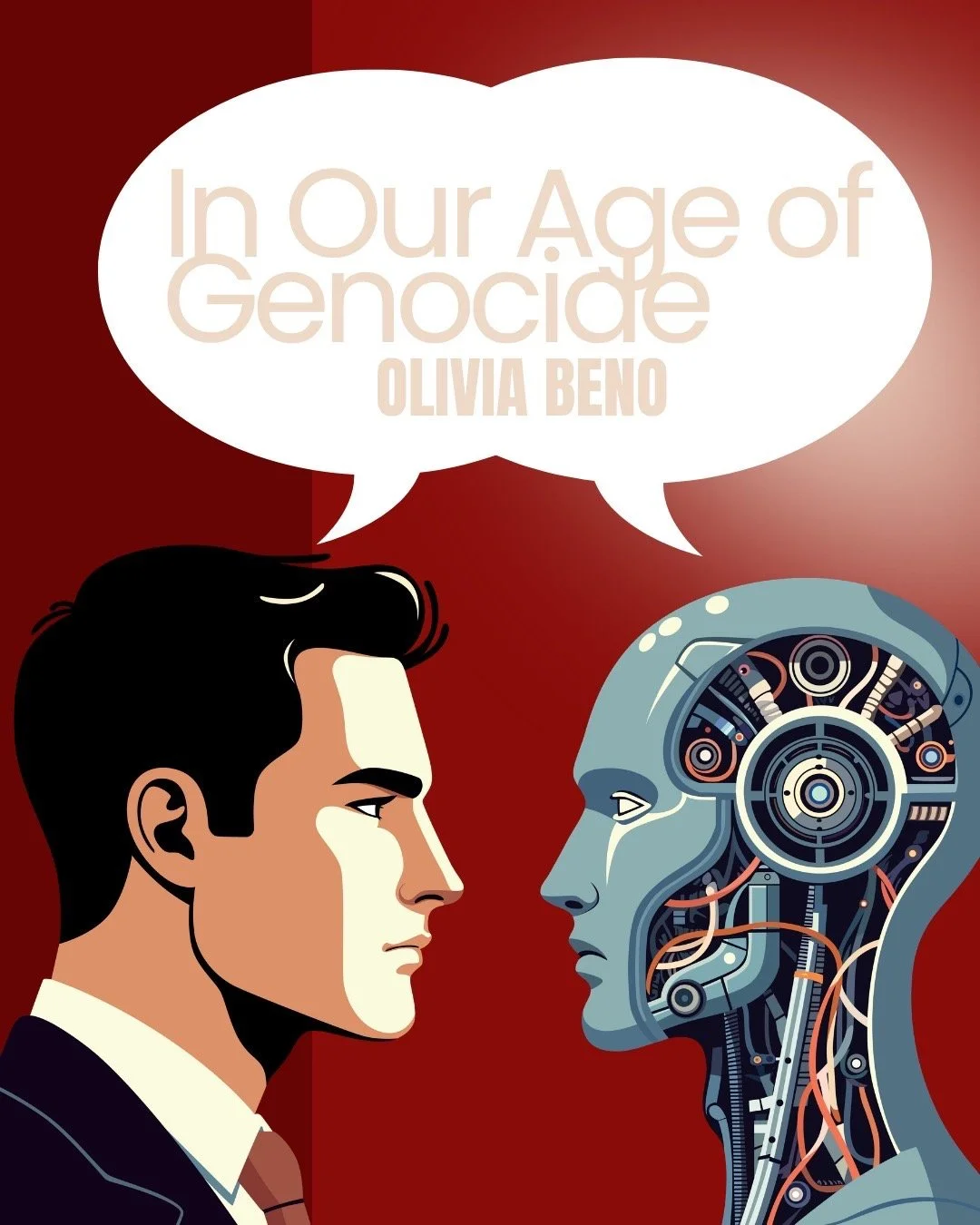
There is an art in dissecting a genocide.
It involves the composition of long lists of possible instigators, the identification of the breaking point, the acquiescence that one cannot determine the precise moment in time that produced the now-certain result. To perform an autopsy, the coroner must distance himself from the body; the victim’s human identity must remain untouched by the emotions of the examiner so that cause of death may be accurately reported. Dissection of a genocide requires the same separation.
Read moreMy family, like many others, sends out an annual at the end of December — or, more realistically, the beginning of January. The page-long note accompanies a smiley holiday card and summarizes the twelve months prior in sweeping, unspecific terms to a selection of friends and family. This year, we asked artificial intelligence to write the letter for us, using a platform called ChatGPT. The decision was born, in small part, out of procrastination, and in large part, out of curiosity. What we anticipated when we input the prompt was amusement. What we did not expect was accuracy.
Read more