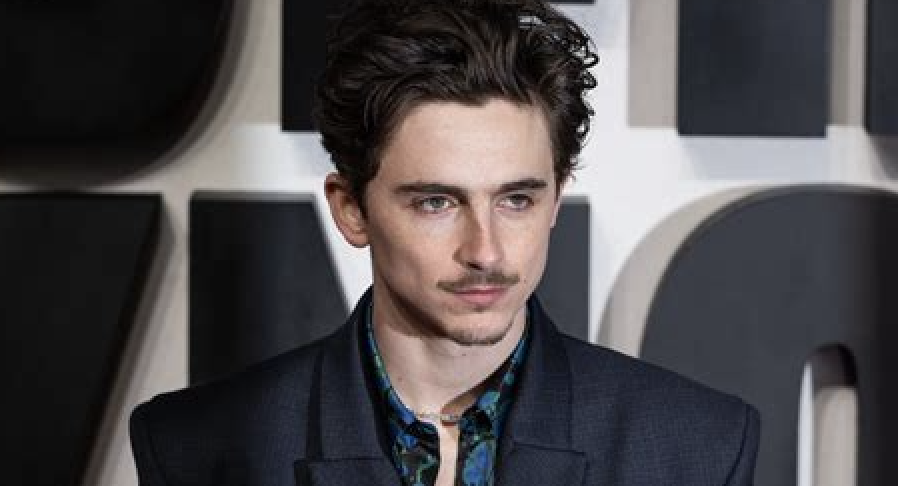
In a novel celebrity scandal, Timothée Chalamet has found himself in opposition to major performing industries after making the sweeping assertion that “no one cares” about art forms like ballet and opera. Chalamet’s comment has been analyzed, criticized, dissected, and reassembled by the Internet so many times that what remains is a vague idea of an egregious injury committed by the Oscar nominee that we cannot quite explain. The controversial remark was recently lampooned by comedian Conan O’Brien at the 2026 Oscars. Chalamet is being criticized, perhaps fairly, but not for a reason that is well articulated by his adversaries. The trouble with Chalamet’s barbs is that they are marked by the exclusivity of the environment he has grown accustomed to.
Chalamet’s comments are not necessarily a reflection of his character—he is indeed correct that ballet and opera performances are not widely appreciated or attended by the masses. They are, however, a symptom of a disconnect between the Hollywood class and the ordinary working people, whose nerves are wrought with the imprecisely and bitterly applied anger born from the sense that they have been wronged by a broad concept of an “other,” an other that Chalamet belongs to. There is no similarity between Chalamet and the average salaried American, except perhaps, should Chalamet choose not to cryogenically freeze himself in blind optimism that we will find a cure for mortality in the decades to come, that they will both grow old and die. The wrong that Chalamet has committed is not the comment itself but the inability to appreciate the hard and ill-paid work of ballet and opera performers. The devaluation of work, combined with the Hollywood smokescreen that makes acting seem so glamorous, cools the empathy felt within the heart of the public for Chalamet’s class of elites.
This is why critics of Chalamet are unable to see the simple fact at the crux of this debate: there are two roles one must play in Hollywood. There is the first, temporal role, which will be watched for generations and remain perpetually irrelevant, and then there is the permanent role of actor that must be played until your age shames you and your fans abandon you. And in this way, Timothée Chalamet, a brilliant performer, cannot act. Onscreen, the Dune actor shines; offscreen, he still hasn’t acclimated himself to the public persona he must wear if he wants the masses to tolerate him. Many actors craft their separate characters to wear in interviews: their carefully curated, agreeable smiles that show up best onscreen; their witty and wholesome quirks that give them that perfect amount of distinction; their impeccable, Brady-bunch, PR personalities with just enough cheek to make one think “yes—this could be a real person.” Chalamet is still in the drafting stage, settling into the character he wants to project, toeing the line between edginess and arrogance. It’s a difficult thing, perfecting that lifetime role. The months of donning the character of supercilious Marty Mauser, the press tour for Marty Supreme, and Chalamet’s own slip-ups have made it difficult to isolate the art from the artist. To the thousands working in ballet and opera, Chalamet’s myopic swagger of a young performer who has established himself as the face of the new acting generation is not easily written off as an error in judgment but instead an unsympathetic jab at the “worthless” arts.
To these workers, Chalamet’s comment reeks of elitism—and nobody wants the elites. Nobody wants the silver-screen ingrates, the nepo-babies, the beautiful glittering people resting comfortably on the millions made from their white teeth and talk-show stunts. They want entertainment, but never the reminder of the insurmountable distance between their lives and the lives of the shining stars whose salaries orbit their own eighty times over. The art of cinema is easy for Chalamet to comprehend: that art has financial promise. Chalamet understands the art of money well—recognizing, for example, that he had “lost 14 cents in viewership” in making his controversial claim. For workers in the “dying arts,” the devaluation of certain art forms for their apparent irrelevance in modern lives is a consequence of elitism. Criticism of the craft, the passion, and lifeblood of performers—that is a consequence of elitism. Chalamet struggles to understand struggle because he is not trying to, in his own words, “keep this thing alive.” He doesn’t need to. But to determine whether an art form is deserving of being sustained based on popularity and profit rather than the value of the art to the performer is indubitably elitist.
The condensation, the simplification of art, is the slow death of the creative. To place importance in an art form simply because of its popularity among the masses is to commercialize art in a way that diminishes the art’s purpose and debases the artist’s intent. We must sleep, eat, and reproduce, and we must create. To decide the value of an art piece not by the labor of the worker but by the marketability of the craft is to damn the development of art itself. For the beauty of art is found in the sake of creation; dancers, vocalists, actors, illustrators, and makers, create value for their work by their investment in the craft. Simply put: art is made beautiful by passion. Art is accessible to all who have a passion for it. A prima donna might perform before a sea of unsold seats, and still her art would have currency because it was born from a love of the medium through which it was created and because it was created with intent. That is what is absent from Chalamet’s consideration – there is no beauty to be found in art when it has been created with the primacy of profit.
Still, it is not wholly Chalamet’s fault. It is trying, no doubt, to endure the histrionics of the public, to predict the unpredictable, and to know that your career is forever dependent on the whims of the people who will not feel the consequence of your ruin. Chalamet belongs to a group eternally bathed in the glow of the limelight, their every move studied, their personal lives bought and sold like stock shares. The odd comment that might be the cause of the quirk of an eyebrow in ordinary conversation becomes a symbol of moral rot amongst the elite. It is buried in their file, unearthed by tabloids to demonstrate with absolute confidence that, “look, there is undoubtedly a pattern of failure here, they’ve flown too close to the sun.” Dug up for the sole purpose of titillating the masses, to tongue once more the sore spot of the ungrateful haves and the wanting have-nots. This brief remark has been catalogued; an apology now will do little to prevent the endless regurgitations of his offhand remark if he finds himself embroiled in any future embarrassments. There is a brewing dissatisfaction among working-class Americans, made stronger each time another celebrity escapes scandal’s consequence. It is the desire to seek justice, and equality, in the most vicious of ways. It is the public fury over the empty noose. Chalamet is not responsible for the wrath directed toward himself—but he is not unjustly criticized.