On April 24th, I had the pleasure of speaking with Skidmore alum Michael E. Mone Jr., who received a bachelor’s degree in Government from Skidmore in 1990 before receiving his Juris Doctor from Boston College. Currently an attorney at the Boston law firm Esdaile, Barrett, Jacobs & Mone, Mone has been the recipient of numerous accolades and honors, having been inducted into the American College of Trial Lawyers in 2023, and has been repeatedly named one of the best lawyers in America. Mone’s career as an attorney has been mainly in the field of civil litigation, with an emphasis on medical malpractice cases, but he has also done considerable work taking on pro bono cases, having helped to release two detainees from the prison located in the Guantanamo Bay Naval Base.
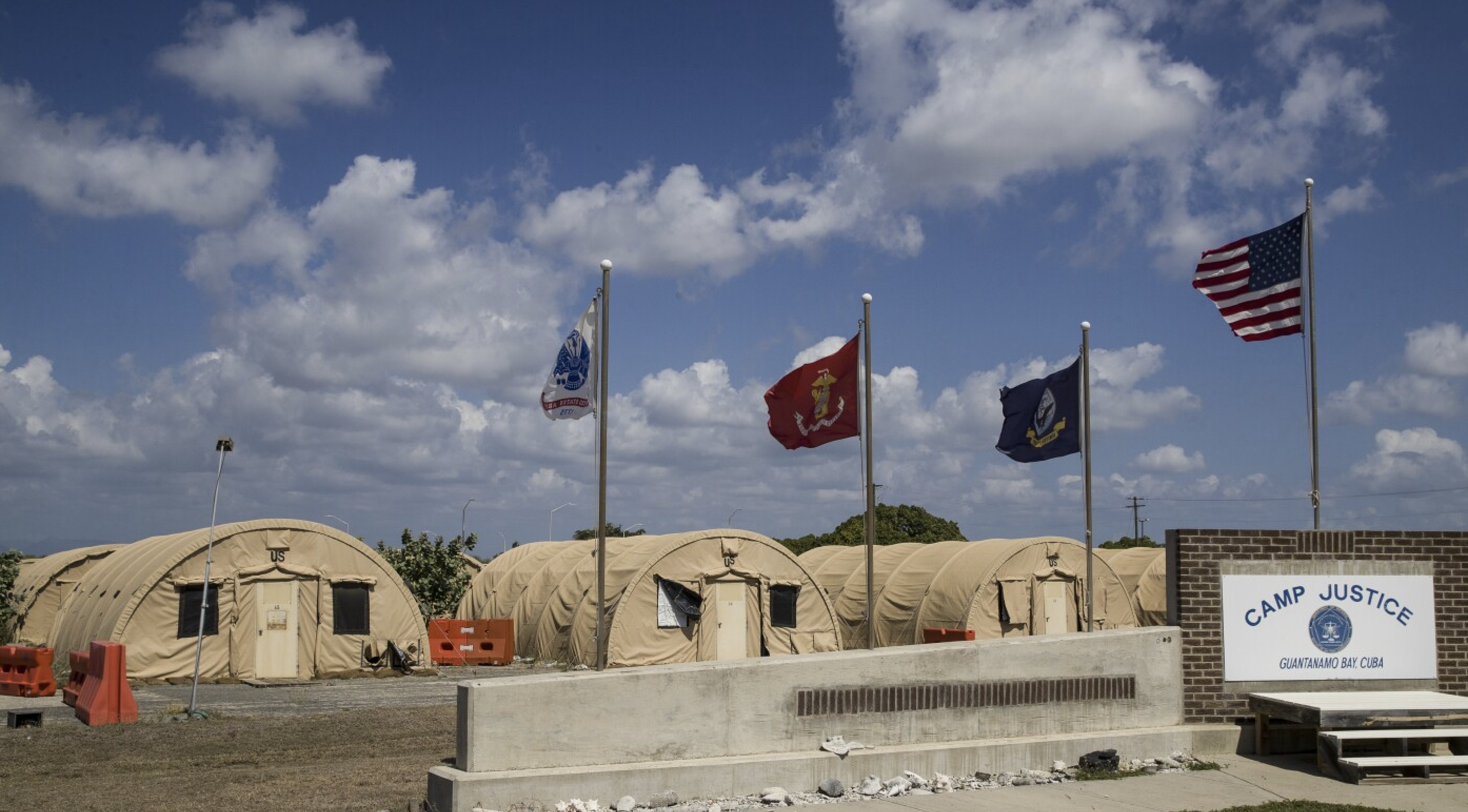
The prison at Guantanamo Bay was first opened in 2002 under the Bush administration as part of America’s efforts to address the threat of terrorism in 2002. Located on the coast of Guantánamo Bay, the prison is highly controversial. The Cuban government has stated that the facility’s presence on Cuban territory constitutes a violation of international law, and the prison itself is notorious for numerous human rights abuses. The majority, if not all, of the prisoners (some of whom were not yet adults at the time of their imprisonment) in Guantanamo Bay were detained under highly questionable circumstances. Many of them were essentially sold to the US and detained without trial when the country offered five thousand dollar bounties to those who provided information about “suspicious” persons. Even more concerning, the prisoners have been subjected to physical and psychological torture, sexual abuse, and egregious mistreatment. The Bush Administration justified the existence of the prison by claiming that, given its location outside the United States, those detained within the prison were not entitled to trial under the United States’ laws. The Bush Administration also claimed that the prisoners were not protected by the Geneva Conventions, using legal semantics to argue that the prisoners were not prisoners of war and therefore not subject to the Convention’s protections of POWs. Fifteen prisoners remain in Guantanamo Bay, an improvement from the facility’s record number of seven hundred and eighty, but its continued operation remains a stain on the United States’ reputation.
The Bush Administration’s use of Guantanamo Bay bears a strong resemblance to the Trump Administration’s deportations of individuals to the Terrorism Confinement Center (CECOT), a maximum security prison in El Salvador. For example, both administrations seem to share an implicit policy of arbitrarily imprisoning individuals outside the US on highly questionable grounds, as well as the incentivization of their imprisonment: where the Bush administration offered bounties for his prisoners, the Trump administration has made a $6 million deal with the El Salvadoran government to imprison deportees in CECOT.
I discussed the similarities between the two prisons, as well as the rhetoric of the administrations that use them, with Mr. Mone. Mone compared the plight of Guantanamo Bay’s prisoners to the case of Kilmar Abrego Garcia, who is currently detained in CECOT despite having no prior criminal record or gang affiliations.
“It’s very similar to the situation with these individuals who’ve been sent down to El Salvador—it’s the same playbook, honestly. It’s like they ripped a page out of the Guantanamo playbook from 2004, 2005.” Mone pointed out the startling difference between these two situations: where the Guantanamo detainees were not taken from the United States, Abrego Garcia was.
“These people [the individuals deported to CECOT] were picked up within the United States, where the Constitution applies and where there is the writ of habeas corpus, a process that gives them the right to a hearing.” For the Trump administration to deport Abrego Garcia, denying him the right to due process, is, then, a violation of the constitution—or is it? Mone highlights the similarities in the rationale used by the Bush and Trump administrations to defend their respective imprisonment programs:
“In Guantanamo, they said, ‘it’s a law-free zone; the Constitution doesn’t apply here.’ In El Salvador they’re saying, ‘it’s in El Salvador; it’s out of our hands at this point.’” Mone’s description of the Trump Administration’s stance on this issue is accurate.
Trump’s Attorney General, Pam Bondi, has said, "If they want to return him, we would facilitate it, meaning provide a plane. That’s up to El Salvador if they want to return him. That’s not up to us.”
In other words, both the Bush and Trump administrations’ policies hinge on the same argument: that the extraterritorial nature of these prisons disqualifies their prisoners from protection under the provisions of the Constitution. There is also the fact that, in both cases, the US government is not forthcoming with the identities of the individuals they’ve detained. “In the early days of Guantanamo, they wouldn’t tell you who exactly they had down there; they’re not doing that here, and they’re trying to argue that these people don’t have any rights. They can’t have lawyers, and they have no right of due process.”
Mone also compared Abrego Garcia’s case to that of one of the detainees he helped release from Guantanamo. According to Mone, one of the detainees he helped to free, Oybek Jabbarov, had been apparently cleared for release and yet remained detained in Guantanamo Bay because, according to Mone, the government had no countries safe enough to send Jabbarov to, including Jabbarov’s home country of Uzbekistan. There is a direct parallel to be made here between Jabbarov and Abrego Garcia, who originally came from El Salvador to the United States to escape the threat of gang violence. The difference between these two cases is the fact that the Bush Administration seemed to have considered the possible dangers of sending a prisoner back to his home country, whereas the Trump Administration seems to have made no such considerations in this case at all.
Mr. Mone’s disappointment in what he believes is a devolution in discourse surrounding these topics was a running theme throughout our conversation. He recalled an incident in the early 2000s where a lawyer at the Defense Department condemned law firms who allowed their lawyers to do pro bono work for Guantanamo Bay detainees, such as Mr. Mone.
“The backlash was unbelievable. He had to apologize, and then within weeks, he had to resign. If lawyers can’t represent even the most unpopular causes or clients, then the whole legal system breaks down. You compare that to today, where the President of the United States thinks it's okay to single out law firms that have had lawyers who happened to be working for causes opposed to him, like the Mueller investigation, or affiliated with the committee on January Sixth; he’s literally targeting them. And if they don’t bend the knee and agree to give up representing these interests he doesn’t approve of and pay an exorbitant amount of money towards defending clients and interests he cares about, he’s going to try and knee cap them. It’s been almost twenty years since this individual made these remarks, and now… it’s unbelievable how far we’ve backslid in this country.”
President Trump’s second term in office has indeed been defined by the breaking of old precedents and the establishment of new ones, testing the limits of what the executive branch can and cannot do. While the federal courts seem to be doing their best to restrain his most dangerous policies, Trump continually seeks to overpower them. Most recently, a US District Court Judge issued a permanent injunction preventing the Trump Administration from deporting Venezuelans from South Texas, and the Trump Administration, on the exact same day, asked the Supreme Court to overturn the judge’s ruling. While Mr. Mone believes that the courts are sufficient to protect against President Trump’s most harmful initiatives, he admitted he has concerns for what this tension between the executive and legislative branches could mean in the long term.
“We’re in a real crisis,” Mone said, “where now the Supreme Court of the United States has said, in a nine-zero opinion, that they had to ‘facilitate’ Abrego Garcia’s return to the United States so that he could have the benefit of due process. And now it’s up to the federal courts to try to figure that out and enforce it, and the only real mechanism is the power of contempt.” As of now, President Trump seems unwilling to provide Abrego Garcia, as well as 278 additional people his administration has sent to CECOT, with the right to due process. Mr. Mone ended our conversation by expressing deep concern for the long-term implications of America’s use of the CECOT facility.
“Despite all the efforts made to correct this, there are still men in Guantanamo. And I don’t know if it’ll ever close. I see how hard it was to close Guantanamo, and I wonder if any of those men are ever going to make it out of CECOT for the same reason. It takes on a life of its own—in order to justify sending these men to Guantanamo, the Bush administration spun this narrative that these were the ‘worst of the worst.’ Well, they weren’t. But having said that, having spent so much time, money, and effort on that message, how can you then turn around and say, “we made a mistake; we’ve got to bring them back”? So in order to justify CECOT, the Trump administration has to create a narrative that they’re all ‘killers,’ and even though they have no evidence of that, once that narrative sets in, then it becomes harder to do anything that’s fair for those men down there.”
In this light, the actions of the Trump administration are not entirely new. They are, at least in part, the continuation of an existing, albeit highly controversial, precedent first established by the Bush administration. However, the speed at which President Trump is enforcing these deportations, as well as the flawed justifications he provides for them, has drawn extensive criticism from constitutional and legal experts and raised several questions, like, what are the limits of the power of the President? To what extent do constitutional rights apply to non-citizens or cases of extraterritoriality? The Trump administration seems to have their own answers to these questions. As for what the long-term results of the administration’s actions will be—only time can tell.
I’d like to thank Mr. Mone for agreeing to speak with me, as well as Professor Biberman-Ocakli from the Political Science Department for facilitating our meeting.