Please be advised that the author of this article, Milo Bisgaier, is currently involved in advocacy efforts to dissolve the Subcommittee on ADA and form a new Committee on Institutional Accessibility.
The opinions and thoughts expressed in this article are solely those of the author and contributing commenters and are written in their personal capacities. They do not unanimously reflect the view of The Skidmore News staff at large or of Skidmore College as an institution or student body. The Skidmore News condemns harassment, intimidation, and the sharing of private information directed at any individuals involved in this issue.
The Skidmore News recognizes the breadth of viewpoints regarding this event and welcomes all respectful discourse related to this issue. Please contact us through our official email (skidnews@skidmore.edu) regarding any thoughts or concerns.
On Tuesday, February 3rd, a proposed resolution was presented for the Student Government Association (SGA) to dissolve the Subcommittee on ADA and form a new Committee on Institutional Accessibility (CIA). Currently, accessibility initiatives within SGA are handled by the Subcommittee on ADA, overseen by the Committee on Institutional Diversity (CID). If this resolution was passed, it would have allowed the CIA to function independently, have a seat on the SGA Executive Committee, and give the Vice President for Institutional Accessibility greater access to Senate and the administration.
These proposed resolutions were voted on during a Senate meeting on Tuesday, February 3rd. Unfortunately, the resolution was not passed, having needed a 5/6ths majority. The vote was 12 in favor, 6 opposed, and 1 abstention. Because Senate did not pass the constitutional resolution, the student body was not afforded the chance to vote.
Why is accessibility important?
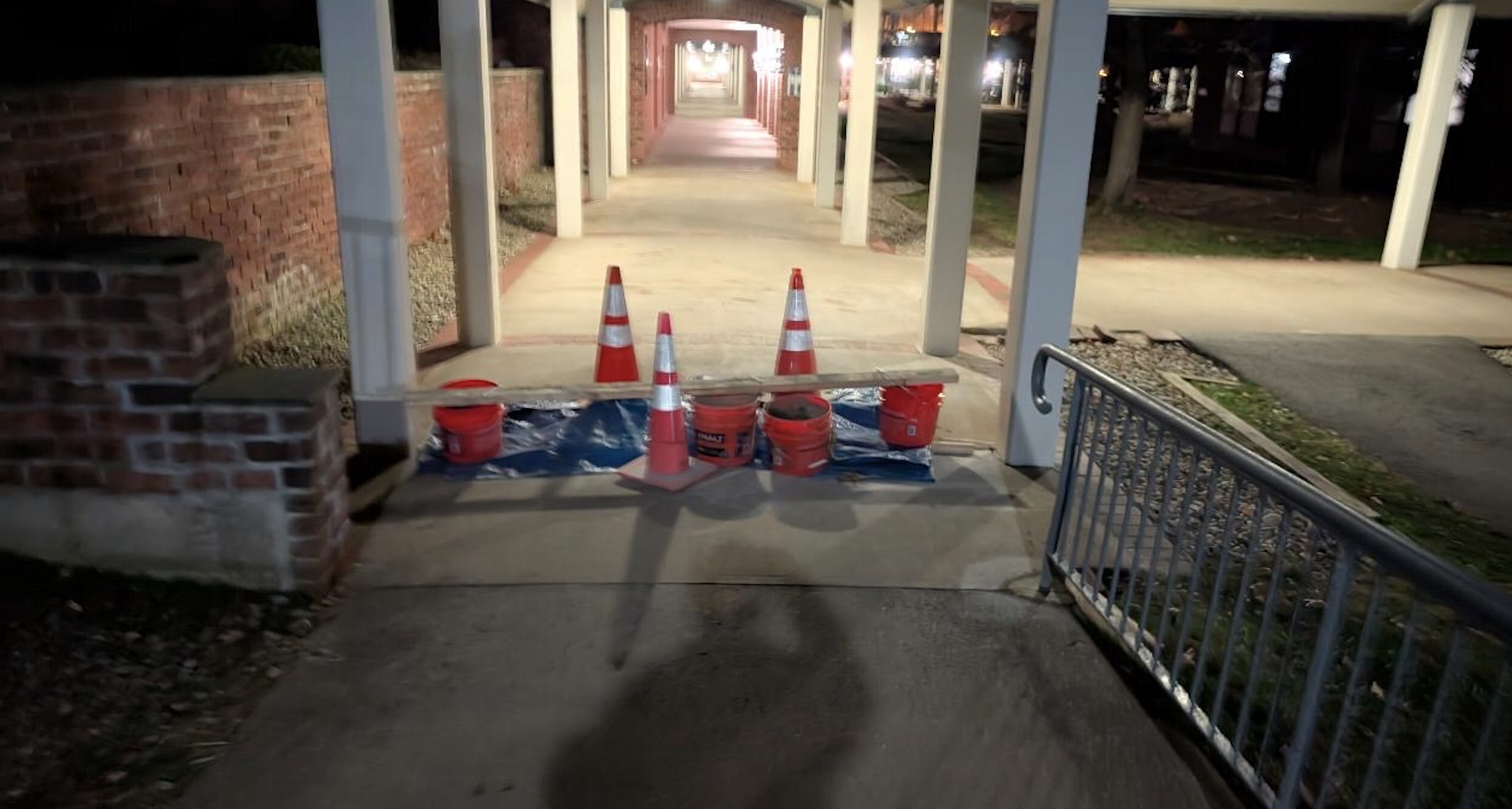
In the past few years, there has been an increase in disabled individuals worldwide, partially due to COVID and its long-term health impacts. According to the World Health Organization, “most people who develop COVID-19 fully recover, but current evidence suggests approximately 10–20% of people experience a variety of mid- and long-term effects after they recover from their initial illness.” This increase is also seen here on campus, between students, faculty, and staff. 26% of enrolled students have accommodations through The Learning Commons, which is concerning considering that there are only 3 staff members to support over 700 students’ accommodations. Accessibility does not only include students with accommodations or physical access issues; it also includes access for mental health, neurodivergence, allergies, and more. These students face a wide array of barriers, including physical access issues (especially during the winter, given the snow and ice), harsh absence policies, which academically punish students for being sick, and lack of a grief absence policy to support students grieving intense losses. There is a significant amount of variety in professors’ decisions about how many absences are allowed and if students’ accommodations are truly respected. Other areas of this campus that are physically or otherwise inaccessible include STEM labs, many bathrooms, the Dance Center, social gathering spaces (such as the Spa, Filene, the outdoor performance space in the new gym, etc.), limited dining accommodations, the path to the McCaffery-Wagman Tennis and Wellness Center, Health Services—now located farther away from main campus—the Annex, Sasselin, the residential halls and apartments, and more.
Student-led access initiatives are crucial for everyone on campus. Any student can become disabled, injured, or sick at any time. Accessibility initiatives also help non-disabled people, like elevators to take you up to upper floors, accessible door buttons for people carrying bulky items or pushing a cart, and curb cuts for people with bicycles or strollers. A college’s core purpose is to teach students, and if students aren’t able to get to classes for any reason, there are bigger institutional issues that must be addressed.
Prior to working alongside SGA to realize this goal, similar initiatives were attempted through a college-unaffiliated student group, AccessMore, from 2024 to 2025. The Accessible Door Button Report Form initiative, for example, began as an AccessMore project in its first iteration and was then adopted as a Subcommittee on ADA project this fall. When a student notices a broken button, they can scan the QR code, which directs them to a form where they can report the button’s location, and this information is sent directly to Facilities. Alongside the door button initiative, AccessMore had begun extensive work on an on-campus transit system and started the early phases of developing a long-term quiet dining area in the Dining Hall, both of which were developed by the Subcommittee on ADA as well. Working alongside SGA, students that had originally been pursuing these tasks independently built new connections with administrators and other access-minded students and faculty. These experiences were invaluable and gave students even more motivation to improve their working collaboration with SGA, as they quickly learned how much more would be possible with support from a student governing body.
Though this push for broader accessibility for the college did not pass, students pushing for access will continue to push for greater visibility and accessibility for disabled and non-disabled students alike. If you are interested in supporting accessibility on this campus, working with these groups, helping their projects, or have any questions, please reach out to Elise Hinrichs (ehinrichs@skidmore.edu), Evvy Shoemaker (eshoemaker@skidmore.edu), or Milo Bisgaier (milobisgaier@skidmore.edu). They would love to have your support in the Subcommittee on ADA, AccessMore initiatives, or even supporting you through the Disabled Students Group.
Though it would have been most impactful to have the voices of the student body heard through the vote, that could not happen. To show how much this matters to students, I have collected statements from a few students and recent alumni:
Elise Burton ‘26
I had an essay due the same day as an out-of-state family funeral. I was refused an extension “to be fair to everyone” in the class (actual quote from my professor’s email)! I spent the morning of the funeral writing instead of grieving. A grief absence policy would have let me actually mourn with my family.
Jane Richard ‘28
I got reformation surgery on my left leg, which has left me unable to wear my prosthesis for the next six weeks. While getting around by wheelchair, I have found the campus to be much less accessible than I thought. My wheels have gotten stuck in snow, my hands are constantly frozen from having to wheel myself around in the cold, and by the end of this endeavor I believe my shoulder muscles will grow to challenge Michael Phelps. Whether I’m on two feet or two wheels, I need consistently plowed pathways, crampons for my shoes, working elevators, a responsive team of campus safety workers ready with a transportation van, and a dorm that isn’t too out of the way from campus, just in case I have a “bad leg day.”
Leo Kett ‘27
I do not have some of the accommodations I’ve had for years. I was not updated when Student Academic Services/The Learning Commons switched from Glean/Genio to the new system, and I had to email the accommodations office to find out what they were replacing it with because I used it during lectures and note-heavy classes. I should have been updated about Glean/Genio from the office, not from the app itself telling me that my subscription was over. Many of these issues seem to be the product of drastic understaffing in the accommodations office. The accommodations office being so small also means there is less 1:1 support and less in-depth responses if something gets denied. The office is also very far away, and it has not been clear when they are at the Starbuck location or the Annex. This is not great because the Annex is less physically accessible, which makes me feel less comfortable going. Many students go to professors to see if they can take a test in an alternate location rather than with [The Learning Commons] because of distance, comfort, time, or the fact that you have to schedule it in advance, which is a struggle for me and others.
Evvy Shoemaker ‘28
I cannot express enough the profound loneliness I feel at every Skidmore social event as a wheelchair user. Even if I help plan the event or work extensively alongside whoever did, I still have to expect being unable to fully participate or attend.
Elise Hinrichs ‘28
As a physics major, a majority of my time is spent in CIS. Unfortunately, as a student with mobility impairments, CIS is incredibly difficult to navigate without injuring myself. Tables and chairs in most classrooms are too tall for me to comfortably sit in, and even though I’m not a wheelchair user, the tables are too tall for anyone who is a wheelchair user to comfortably sit at. Lab doors are heavy and have no door buttons, so I struggle to even open doors in CIS, and once I’m in a lab space, it’s a coin toss on whether or not I’m able to comfortably navigate with crutches due to how small the spaces can be.
Roman Holland ‘29
I'm part of OP [Opportunity Program], and every semester they have a general body meeting that is mandatory, and absences are only excused for academic conflicts. I get really severe migraines that leave me unable to function. Because of this, my doctor has advised that I don't use screens when I have these migraines for many reasons. I had a really bad migraine when the general body meeting happened and was unable to tell anyone right away. I was planning to email them and explain what happened the next day after my classes, but they emailed me first, informing me that because I had not gone to the meeting, my book and supply card was revoked until I spoke with them, and this now leaves me unable to buy books for 2 of my classes because I can’t afford them otherwise.
Yvette Walla ‘28
Between the mislabeled food and minimal options, the dining hall at Skidmore is not the place to be if you have any dietary restrictions. In order for me to eat gluten-free in the dining hall, I have to go to extreme lengths before eating anything unless I want to risk getting sick.
Anonymous, ‘26
My biggest access need is having a properly regulated temperature of my living space that I can control. I have a chronic migraine disorder where heat is my biggest trigger for an episode. Living in a space that is too hot will cause me to get severely sick, and I won’t be able to function. Living in the school’s dorms is nearly impossible for me since the HVAC systems of those buildings are badly regulated.
[Note: This student had to move out early freshman year because their room was 90 degrees, lived off campus the first semester of their sophomore year, and was lucky to find housing in an on-campus apartment the spring semester of their sophomore year.]
Aelin McKenchie ‘28
So many of the buildings on campus aren’t accessible, and the rickety elevators are put at the end of the hallway like an afterthought. I can take the stairs most days, but when I can’t, maneuvering around campus becomes near impossible. My physical needs feel unimportant to most people on campus. Getting an accommodation is hard because I can’t predict when or how often I’ll be immobilized, and the office seems unwilling to work with me.
Bridget Coyer ‘25
As an alumna of Skidmore College and, for a large portion of my attendance, the only wheelchair user, I understand the unique exhaustion of self-advocating. The Committee on Institutional Accessibility means that other disabled students would be provided a group to provide them resources and fight alongside them for progressive change. Disabled students deserve to speak with their own voice, and this committee would give them that opportunity.
Nas Wright ‘28
This project means so much to my ability to attend this college. As a studio art major, I have experienced firsthand how badly our program is built. From the lack of chairs with backs in most classrooms to the 3-hour courses that don’t have a mandatory break time built in, our department (among others on this campus) is in desperate need of standardized accessibility measures. I lack accommodations because they’re incredibly hard to get, and I’ve run into problems in my art classes due to the decreased mobility of my joints, specifically my hands. Deadlines are tight and sometimes impossible to meet and score well on. Communication with professors lacks change or possible outcomes with the redundant statement “get accommodations.” The tables are terrible and require climbing into high seats (specifically in the digital studio). The main entrance has ridged ledges that make getting in hard. The supplies at the Skid Shop run out insanely quickly because we don’t have an adequate section for them, and it takes weeks to reorder.
Anonymous ‘29
The dining hall is loud, and there is no obvious way to get food without it when living in dorms. Accommodations are available, but not readily and not without extensive coordination with both dining services directly and [The Learning Commons]. It is not accessible (or college student schedule) friendly because the menu rarely matches the foods being served, there are no low-top two/single-seater tables, no quiet dining zone, and no way to take food out of the dining hall without a complicated accommodation.
Andrew Bozio, Associate Professor of English
Accessibility affects everyone on our campus. Because so many disabilities are non-apparent, and because the process of seeking accommodations is intended to be private, it's not always clear who is struggling to get the support that they need. That's why we need a Committee on Institutional Access—to ensure that the college is taking active steps to provide meaningful access to everyone.
AccessMore proposed access initiatives:
Grief absence policy
Standardized sickness absence policies
Policies on technology in the classroom
Standardized built-in break times for 3 hour classes
Standardized accessibility guidelines for all-college events
A quiet dining zone
Standardized and reliable dining hall information (especially for allergens)
Health services restarting medication and COVID/flu test delivery for sick students to not have to leave their rooms.