When I tell people that my summer plans consist of me spending two months in Wisconsin, I’m usually met with looks of confusion. The resounding question seems, simply, to be “Why would you choose to be in Wisconsin?” This leads into my spiel about Madeline Island, one of the 22 Apostle Islands on Lake Superior.
Located on Lake Superior off the northern coast of Wisconsin, Madeline Island is where I’ve been traveling in the summer since 2023. With a year-round population of 302—which increases during the tourist season in the summer months—Madeline is the only inhabited island of the Apostle Islands. The island’s town, La Pointe, consists of a small collection of shops, restaurants, art galleries, a marina, an elementary school, and a singular gas pump—running at $7 a gallon—all clustered on one main road by the ferry dock.
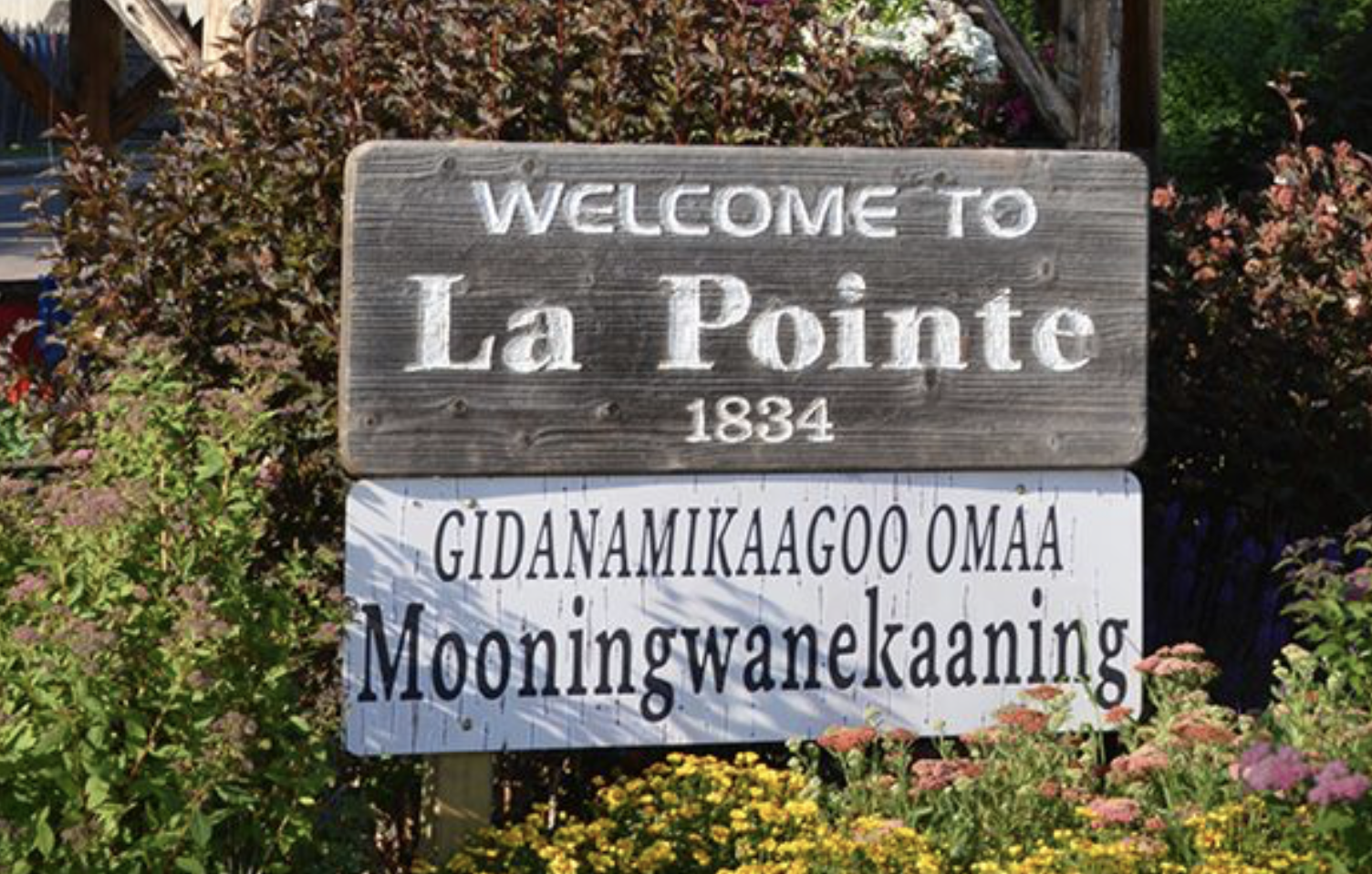
The island is named for Madeleine Cadotte (“Ikwesewe” in Ojibwe), the daughter of a prominent Ojibwe chief from the 19th century. The island is a significant location for the Lake Superior Chippewa, a series of Ojibwe bands who reside in the Upper Peninsula region of the United States. In fact, the island was originally named “Mooningwanekaaning” (meaning "At [the Place] Abundant with Yellow-shafted Northern Flicker") by the Bad River and Red Cliff Ojibwe Indigenous communities that inhabited the land.
During the 19th century period of government encroachment on and removal of Native lands, Kechewaishke (also known as Chief Buffalo) was the head of the Ojibwe band on Madeline Island, and he played a vital role in protecting reservations. Under the Treaty of La Pointe in 1854, the chief helped establish the Red Cliff Indian Reservation—a community on the mainland—as well as the Bad River Indian Reservation, which occupies nearly 195 acres of the eastern side of Madeline Island. To this day, the island honors this legacy as Ojibwe culture has a strong presence in the area: the signs around town are in both English and Ojibwe, and La Pointe has a museum in the middle of town detailing their history on the island.
When I first visited Madeline Island in 2023, I stayed for just a week with my close friend in her grandparents’ home, a house that has been in their lineage for hundreds of years. I absolutely fell in love with the peacefulness and natural beauty of the island: picking thimbleberry bushes in the backyard, biking down red clay roads lined with daisies, and swimming in the lake at night create a kind of calm and quietude that is difficult to find elsewhere. The vegetation of the island is only found in a few places on Earth: categorized as a boreal forest, its ecosystem is similar to that of Canada, Finland, Scandinavia, and western Russia, according to Madeline Island Realty. Its dark sky and lack of light pollution make the island an ideal spot for stargazing as well, the Milky Way being visible on particularly clear nights on the dock.
In the summer of 2024, I returned to Madeline for the month of July, working alongside my friend in customer service jobs in La Pointe. From being a server at one of the three restaurants on the island or working in a coffee house whose owner is only accessible by physically showing up on her doorstep, the island is full of odd jobs that allow for a multitude of absurd but memorable stories. Most of the week I worked in the island’s only food market, a job I acquired simply by writing my name down on a Post-It note one day when I walked in the door. The market—a hippie one-stop shop with different odds and ends that probably cannot be found anywhere else on the island—is somewhere between a gas station, Chestnut Market, and a Whole Foods.
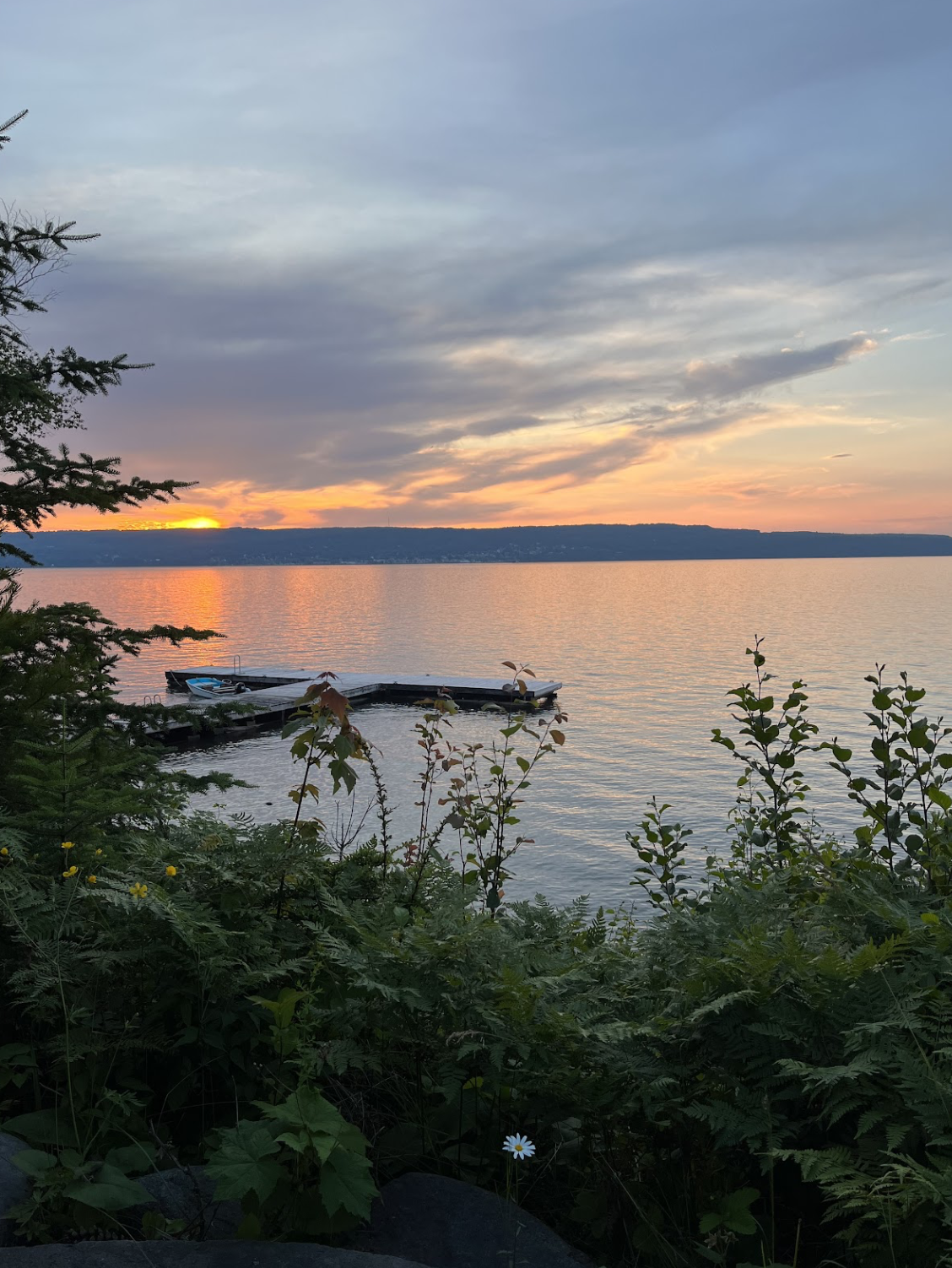
A sunset overlooking a lake in La Pointe, Wisconsin. Image courtesy of Sophie Halliburton ‘28.
My other job was in a small gift shop in front of the island’s ferry dock, a store frequented by oncoming tourists, who were typically day trippers from the Twin Cities or some other part of the Upper Peninsula. When customers notice I don’t pronounce “bag” as “bayg,” they often ask where I’m from and are dumbfounded to find out it’s New York. In terms of customer service, the worker demographic mainly consists of Midwesterners and Bulgarians—who partner with Madeline Island through a work exchange program—so encountering somebody from the East Coast is rare.
Though it’s not the easiest place to access, the fastest route being two flights, a two-hour drive, and a ferry ride, there’s nowhere I’d rather be this summer. It’s quiet, it’s routine, and, more than anything, it’s a nice change of pace, far removed from everything else.